
The red-list forest edge
About a tenth of the land is being brought back to native species from the Dutch red list.
On the transition from ornamental garden to forest lies a zone we are deliberately letting recover. Here the non-native species slowly disappear and native red-list species return. It is a slow process — trees need time to make room.
Non-natives being phased out
- Northern red oak
- Quercus rubra — aggressive invasive, crowds out native species
- Black cherry
- Prunus serotina — a well-known problem in Dutch forests
They are not being cut down harshly — they are gradually replaced by native species taking over the zone.
Native species getting their space
The aim is a forest edge of the kind you find in old Dutch landscapes. Exactly which species those turn out to be depends on what settles — succession is given room. Vaccinium (blueberry) does not belong in this edge (that plant lives in the food forest).
What you see and hear
Together, the wild meadow and the forest edge are home to:
- Birds: flycatchers, woodpeckers, tits, nuthatches, treecreepers
- Mammals: roe deer, squirrels (both can be spotted from the bedroom windows)
- Insects: bees, butterflies, beetles
- Amphibians: frogs (in the pond on the land)
Through the year
April — wood anemone and lesser celandine.
Autumn — Virginia creeper turns the view red.
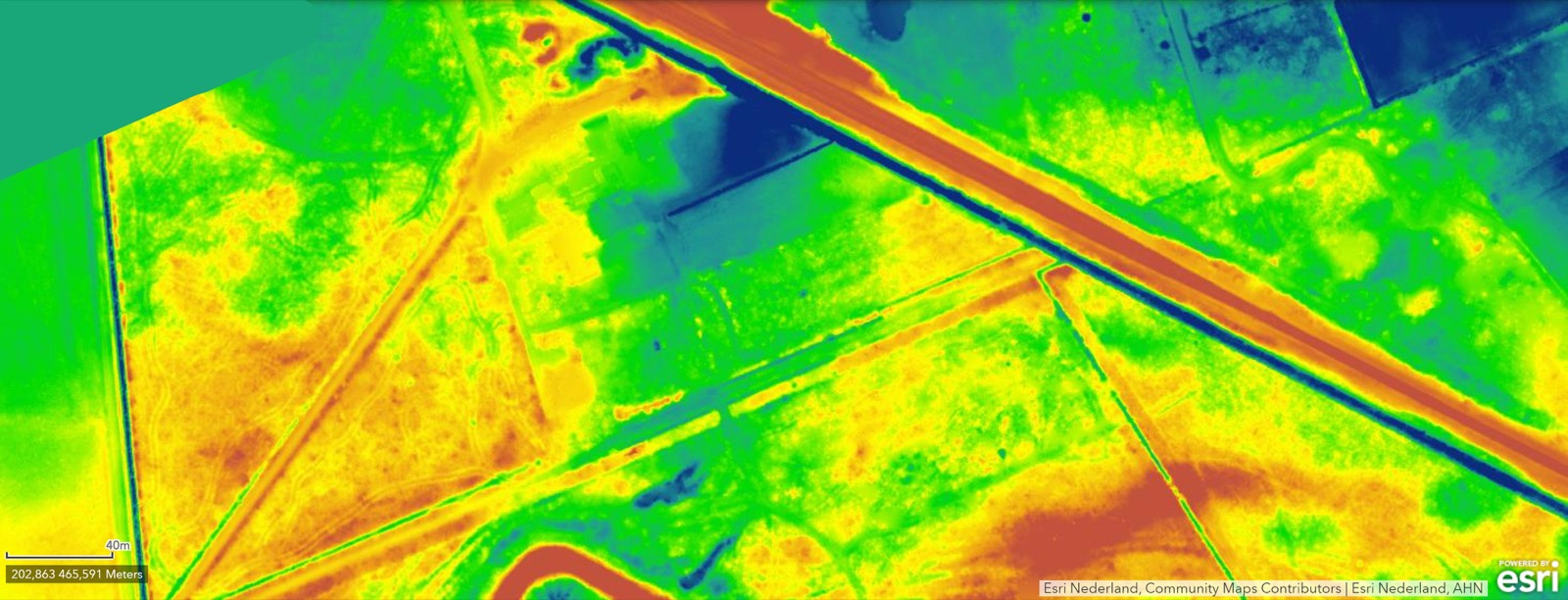
The land on the elevation map
Beyond what you see here
50 m away lies the medieval Bandijk dyke and an old river pool left by the IJssel. The place sits in the middle of a region where country-estate woodland, the river IJssel and the edge of the Veluwe all come together.