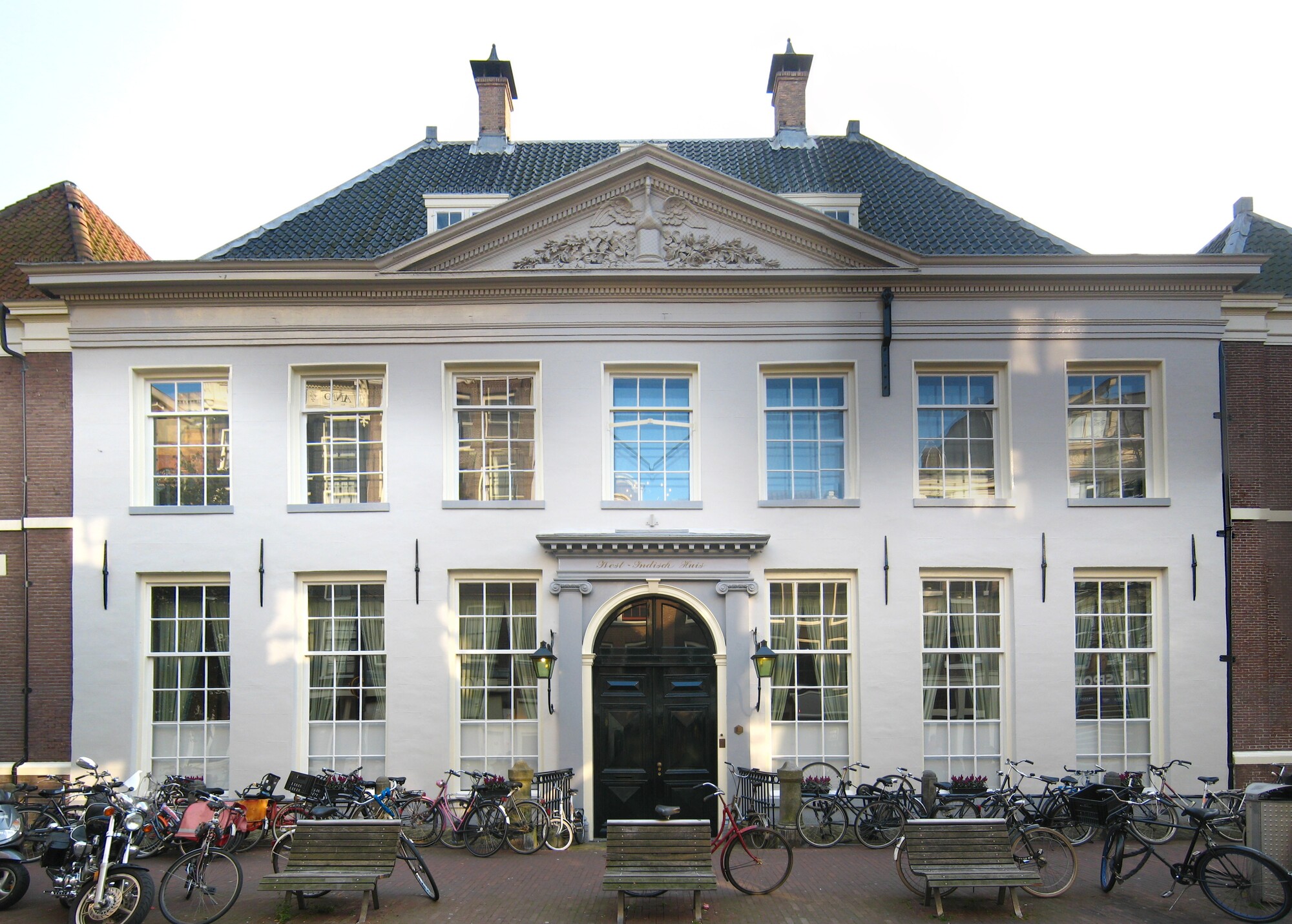
West Indisch Huis
A white, Dutch classical building stands on the edge of Haarlemmerstraat. On the canal side, a large playground provides refuge to parents and grandparents from the neighborhood, looking for a place to breathe. The Brouwersgracht provides delightful views of the start of the Amsterdam canal belt.
This building gave birth to the town that would become New York City. The order to start the town of New Amsterdam on the island of Manna Hatta on the other side of the Atlantic Ocean, was signed in room upstairs.
Manhattan Island at this time was covered by woods and brush, where at night the sounds of bears and other wildlife could be heard. Along the shore line of Manhattan and later Brooklyn, the marshes and swamps reminded the Dutch settlers of the marshes around Amsterdam. Dutch settlers erected a large stone building on the tip of Manhattan, later it was turned into a Fort, Fort Amsterdam, which would become the center of power of the new town of New Amsterdam.
Five years later, in 1614, independent merchants went up the same route Hudson went, and built Fort Nassau where the city of Albany, NY, currently stands. The merchants envisioned a ‘New Netherland’, which was subsequently founded. To handle trade in the Americas, the Dutch States-General founded the West India Company in 1621, and moved them into the building we’re here for. The West India House. Its front is a restaurant and event location on Haarlemmerstraat.
The West India Company traded in sugar, tobacco, fur… and human beings. Especially in the Carribean and Brazil. It also traded land, often with people who did not share the same ideas about land, ownership, or sovereignty.
From this West India House, as it was then called, the colony of New Netherland was founded in 1624. A year later, merchant Peter Minuit gifted a set of goods to a Lenape tribe on manhattan, and subsequently claimed it as land for the Dutch to use exclusively. The Lenape probably thought this was just a gesture from the Dutch to co-share the land. This ‘deal’ happened on the tip of Manhattan, where today tourists enjoy view of the statue of liberty and New York Bay.
On the top floor of the West India House are the offices where the order was given to found New Amsterdam, the town that would give birth to New York City. New Amsterdam would become a cultural copy of the Old Amsterdam of the time. A refuge for chased communities and adventurous misfits from all over the world. The old Amsterdam didn’t care much about background, as long as you could make yourself useful in the present.
New York, and the United States at large, kept that central element of the American dream from this town, which by that time was growing into the world’s most dominant power. If you walk towards Brouwersgracht from the West India House, you’ll have amazing views of the houses that were built during the years we just discussed. Many of these houses are the originals from 400 years ago.
This story sits on the map in the Free Amsterdam app, which walks you to the spot.
Open this story on the map