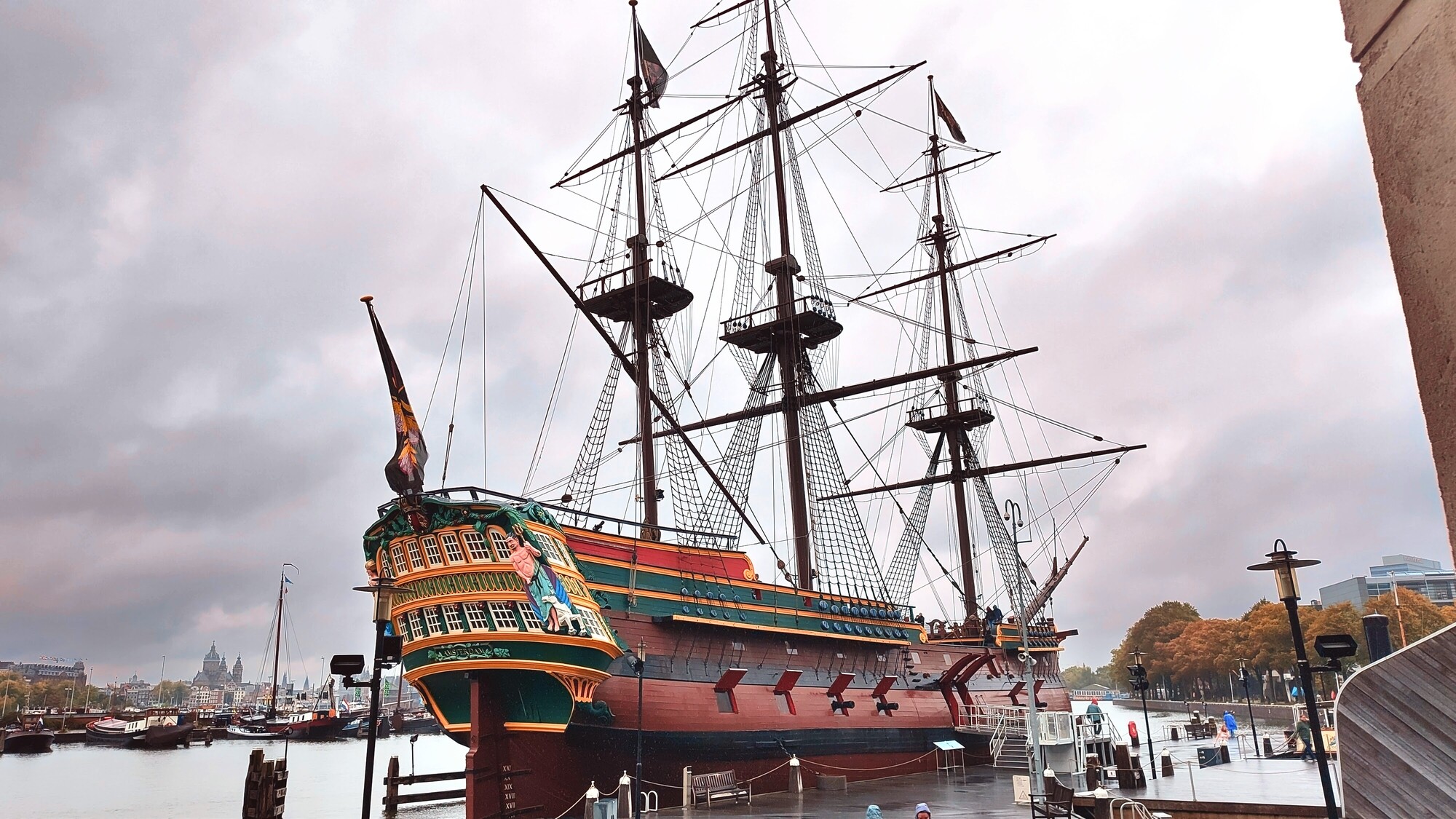
New Netherland
Four centuries ago, consequential decisions were made in Amsterdam that would reverberate through the histories of many countries around the world. Most of the focus was on the Far East, where the Portuguese and Spanish were driven off as the dominant maritime power. Unlocking trade by ships to China, Indonesia, India, and many areas in between.
Very little interest was given to the colonies in North America. All Amsterdam cared for in those days, was finding a quicker way to the Far East.
In November 1608, Captain John Smith of the Virginia Company had sent several documents to England, including a “Mappe of the bayes and rivers’ of the recently explored American coast. He also sent them to a friend, the English seafarer and explorer Henry Hudson.
Henry Hudson had sailed multiple voyages to find a Northern passage to China and Japan, through the arctic. Knowing that the Dutch States-General had posted an offer of reward of 25,000 guilders to anyone who could such a route, he took on a job from the Dutch United East India Company to do so. He would get 800 guilders for leading the expedition; his wife would get an additional 200 guilders. After two earlier attempts under an English flag, Hudson went on a third voyage in 1609, under a Dutch flag.
His contract stated he had to sail North. But shortly after leaving on the 25th of March 1609, temperatures started dropping and snow storms started moving in. Quarrels broke out between the Dutch and English crews.
Hudson showed the crew the maps and letters received from John Smith, and a decision was made. Hudson would break his contract with the Dutch East India Company and sail West - towards the New world, for warmer sailing. To see if there was a passage to the Great Ocean on the West side of the Americas, north of the southern English colony.
Their destination would be a tidal estuary, full of wetlands, forests, and a migratory center and crossroads for birds and marine life and a people who called themselves Lenape. They fished, farmed, traded, and moved with the seasons along the rivers and islands now known as New York Harbor.
The colony of New Netherland was founded in 1624 and would last for about 40 years, and has its own rich history. Eventually, the English would take of the area, and then the American revolution made the lands American. Still, the last pockets of Dutch were still being spoken until the early 20th century. The last native Dutch speakers or of Jersey Dutch, a creole version of Dutch, passed away in the 1920s - 300 years after the founding of New Amsterdam and New Netherland.
This story sits on the map in the Free Amsterdam app, which walks you to the spot.
Open this story on the map