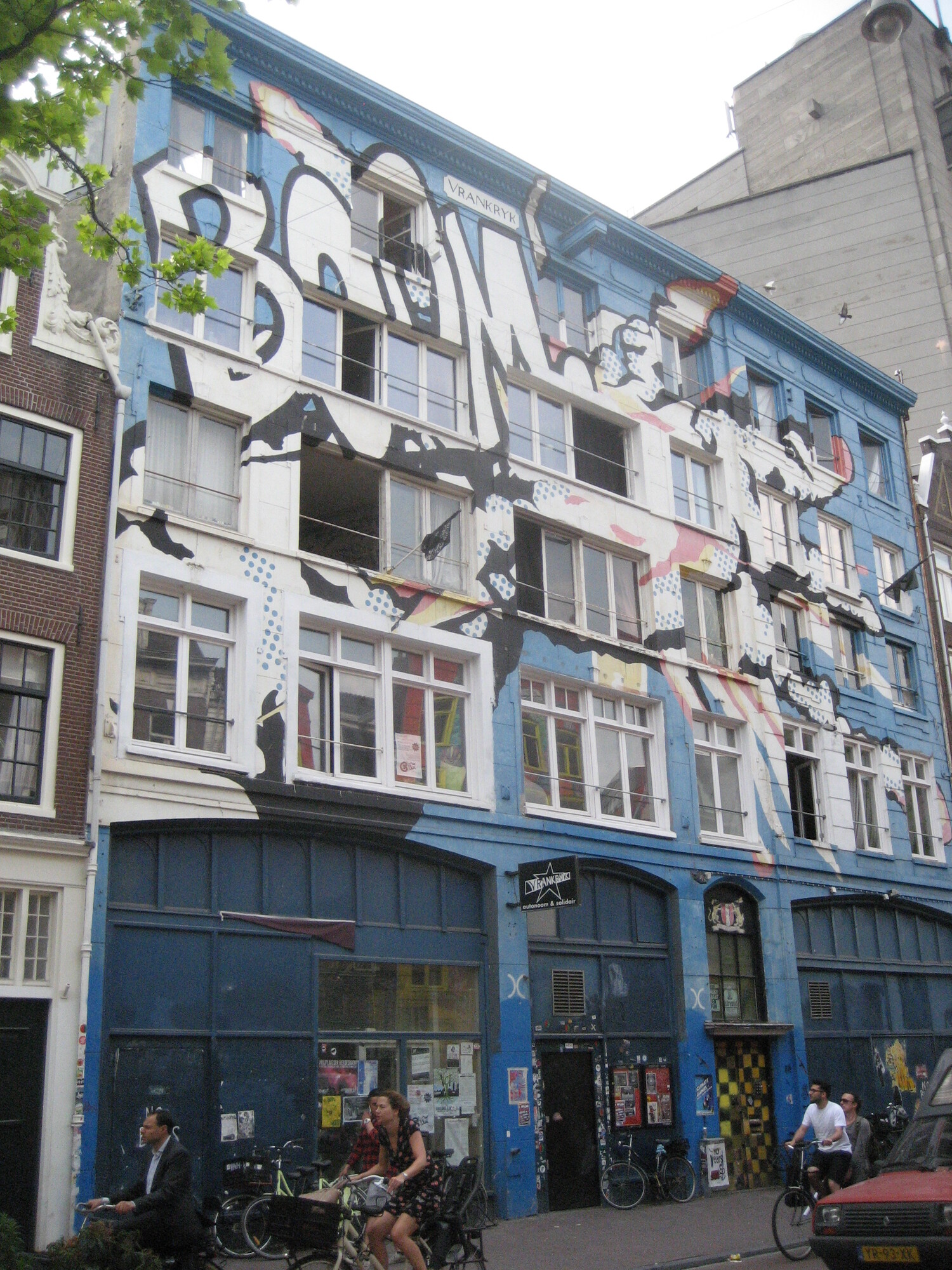
Squatting: From Crisis to Counterculture
In the 1970s, Amsterdam was drowning in a housing shortage. Rents were high, wages were low, and thousands of buildings stood empty. Out of this contradiction grew the squatters’ movement — kraken — where activists and the homeless alike opened up abandoned houses and claimed them as homes. With the slogan geen ontruiming voor leegstand (“no eviction for vacancy”), squatting became both a practical solution and a political statement.
Houseboats, now some of the most desirable and photogenic properties on the canals, were once squatted as well. In those days, they were symbols of an alternative lifestyle: cheap, precarious, but free. Entire neighborhoods had a squatter presence, creating a patchwork of communities that lived outside the logic of the housing market.
The courts, surprisingly, backed them for decades. If a house had been left empty for more than a year, squatters had the right to move in. Squats became more than shelters; they evolved into cultural hubs, social centers, and venues for art, music, and politics. Places like Vrankrijk in the city center became legendary, reminders that even in a tightly controlled city, alternative spaces could thrive.
But the tide turned in the 2010s, when a national ban on squatting came into force. Empty property was now protected by law, and the police were given powers to evict. Most of the old squats disappeared, their buildings converted into apartments, offices, or boutiques. Some fringe communities hung on, like the squatted land at ADM or Het Landje, but they were eventually cleared as the city expanded.
Still, the spirit of squatting hasn’t vanished. On the edges of Amsterdam, and on small boats moored in secret, people continue to find ways to live outside the official housing system. In a city where demand far outstrips supply, and where gentrification reshapes whole districts, the old slogan resonates again: no eviction for vacancy.
This story sits on the map in the Free Amsterdam app, which walks you to the spot.
Open this story on the map