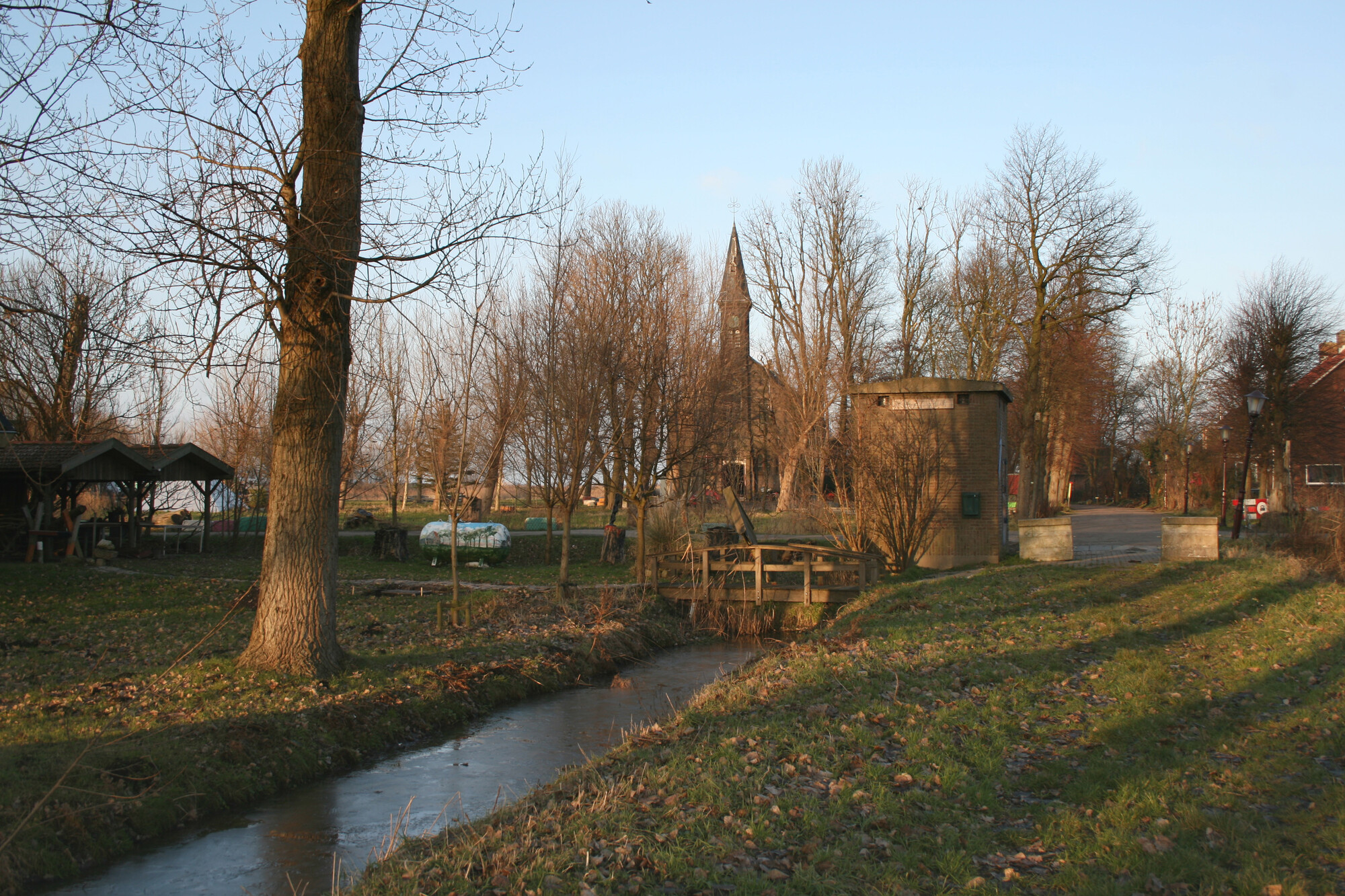
Ruigoord: Amsterdam’s Psychedelic Village
On the western edge of Amsterdam, where the oil harbor stretches toward the North Sea, lies a village that refused to disappear. Ruigoord was long ago an ordinary polder settlement, and when the harbor expanded in the 1960s, the city planned to demolish it. After most residents left, a group of artists, poets, and dreamers moved in, determined to keep the place alive.
One of the key figures was Hans Plomp, a poet who helped turn Ruigoord into an artistic free state. Instead of surrendering to the oil industry, the squatters filled the empty houses with studios, stages, and workshops. They rechristened the church into a ‘psychedelic chruch’ and organized the Landjuweel, a yearly festival of art, music, and theater that draws in thousands and became legendary in the Dutch counterculture.
Psychedelics were never far away. Ruigoord’s gatherings blurred the line between ritual and rave, echoing the 1960s belief in expanded consciousness. In the old village church, ceremonies and performances still connect art to altered states of mind. For some, it is a place of spirituality; for others, simply a place where freedom is practiced in its most radical form.
Ruigoord is unique in Amsterdam precisely because it feels so far away. Surrounded by oil tanks and industry, it survives like an island of imagination at the city’s edge. Yet its story is also typically Amsterdam: a mix of pragmatism and rebellion, commerce and counterculture, a refusal to let the market decide the value of a place.
Half a century later, Ruigoord remains a living experiment. It is part village, part commune, part festival ground — a reminder that in a city famous for its tolerance, space can still be found for those who dream differently.
This story sits on the map in the Free Amsterdam app, which walks you to the spot.
Open this story on the map