Radical Enlightenment
Amsterdam has long been a city where radical ideas could take root. In the 17th century, when most of Europe was governed by monarchies and religious orthodoxy, the Dutch Republic offered unusual freedoms. Not out of philosophical activism, necessarily, but often for practical reasons. For open trade, it's just much more fruitful to not prosecute any strange belief that comes along.
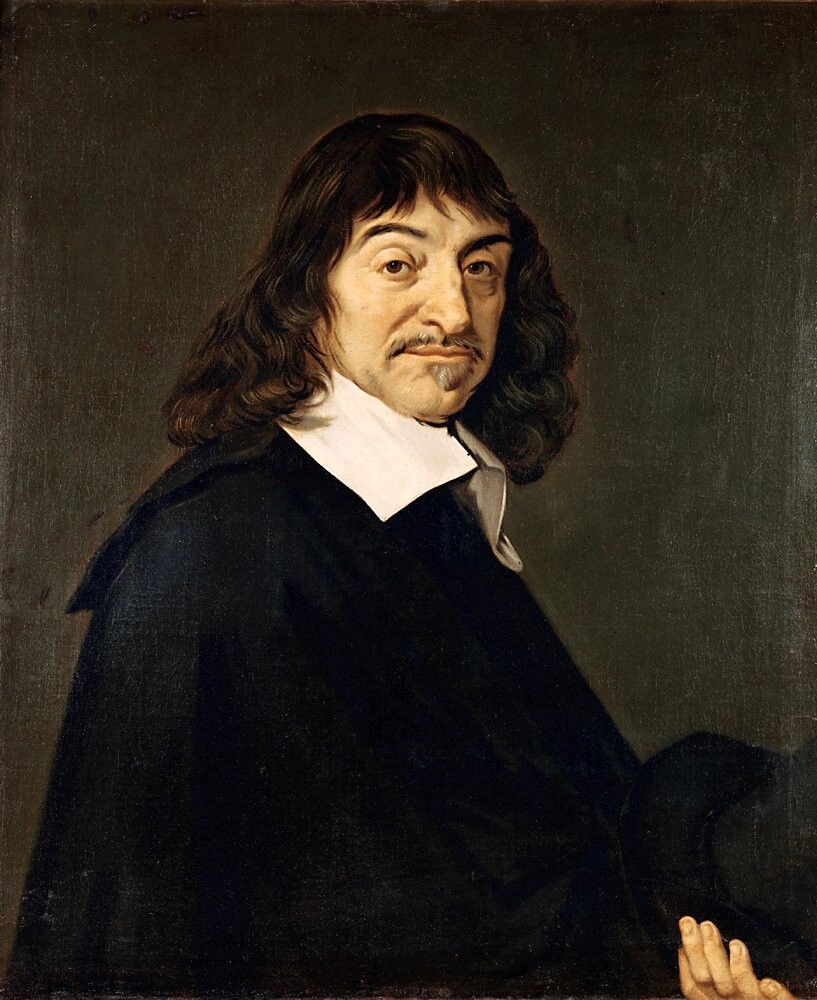
It was here that René Descartes found refuge, escaping the distractions and censorship of Paris. For two decades he lived and worked in Amsterdam, developing his philosophy in the relative calm of a city that tolerated unorthodox views. It was during this time that he arrived at his most famous insight: I think, therefore I am.
Baruch Spinoza, Amsterdam’s most radical philosopher, went even further. Excommunicated from the Jewish community for his heretical views, he lived modestly while crafting a philosophy that equated God with nature itself. For Spinoza, divinity was not a distant ruler but the very substance of existence, accessible through reason and inquiry. His writings laid the foundations of what later came to be called the Radical Enlightenment — a belief in democracy, equality, and freedom of thought that challenged the hierarchies of church and state.
Amsterdam’s tolerance was not unlimited, but at times it revealed a deeper current of solidarity. In February 1941, after Nazi forces began deporting Jews from the city, workers launched a general strike in protest. Known as the February Strike, it was the only mass uprising in occupied Europe against a pogrom. Though it was quickly crushed, the act of resistance became a lasting symbol of Amsterdam’s civic courage.
Centuries later, the same traditions found new expression in the counterculture. In the 1960s and 1970s, Amsterdam became a center of psychedelic exploration and artistic revolt. At Ruigoord, a village outside the city taken over by artists and squatters, psychedelics and experimental art were used as tools of consciousness and community, and exists to this day. Like Spinoza’s philosophy, these movements blurred the boundary between the individual and the cosmos, celebrating freedom as both a personal and collective act.
Yet radical thought in Amsterdam has also provoked sharp conflict. In 2004, filmmaker Theo van Gogh was murdered in broad daylight after producing works critical of religious dogma. His death reignited debates about tolerance, free speech, and the limits of provocation in a pluralistic society. It was a stark reminder that Amsterdam’s tradition of freethinking continues to be tested.
From the lofty philosophy of Spinoza to the psychedelics of Ruigoord, from Descartes’s quiet studies to the public shocks of Van Gogh, Amsterdam has remained a city where ideas are pushed to their limits. Radical Enlightenment here is not just a moment in history but a recurring impulse — to question, to resist, and to imagine new ways of living together.
This story sits on the map in the Free Amsterdam app, which walks you to the spot.
Open this story on the map