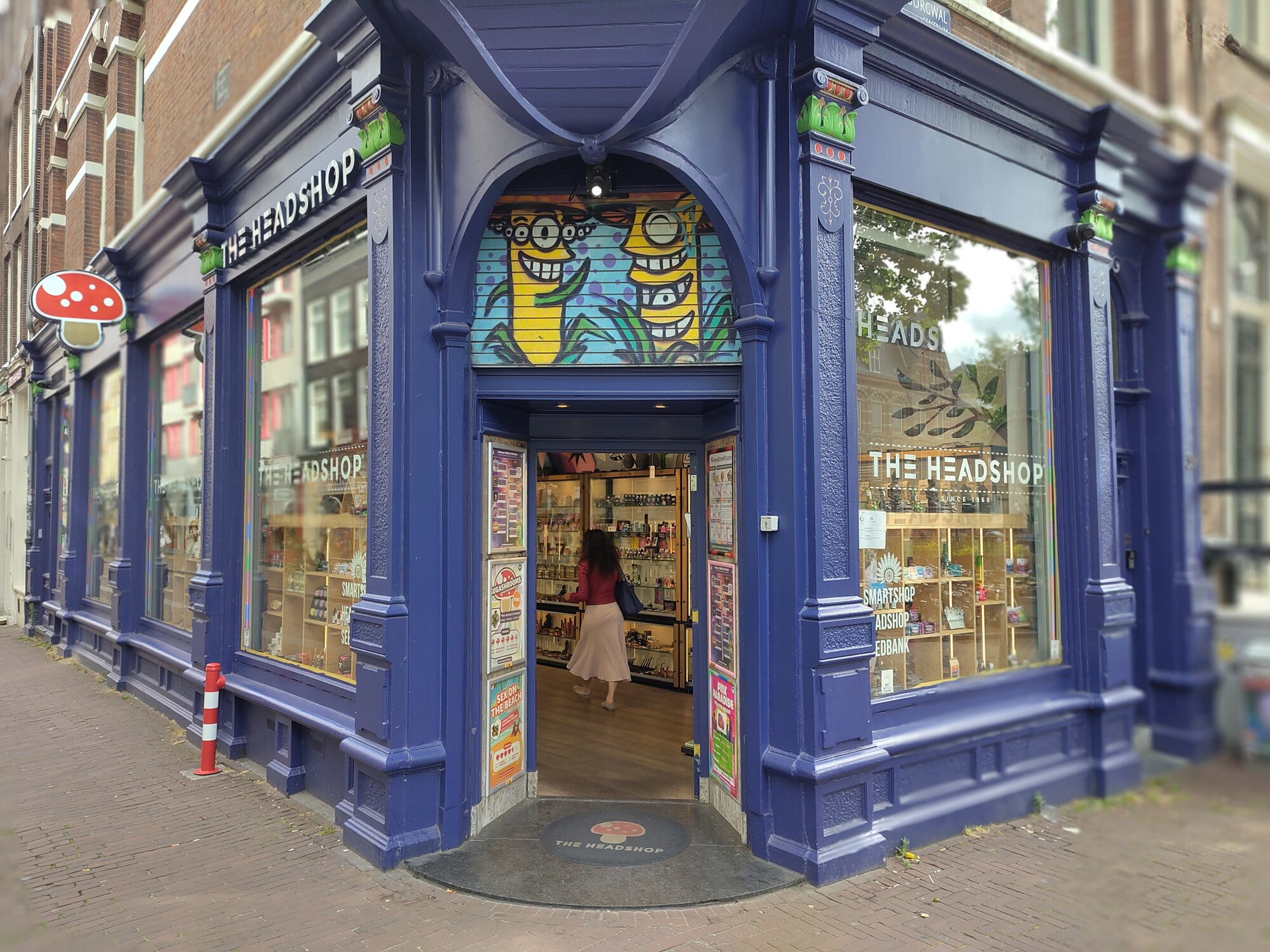
Smartshops
In 2008, a French girl called Gaelle Garoff’s lifeless body was found at the bottom of a science museum. She was 17. Her friends declared she had joined them in taking psychedelic mushrooms and had lost her. The story, as they
“We hold the Dutch government responsible for the death of our daughter”, two Amsterdam’s smartshops are a product of the city’s peculiar balance between tolerance and control. Evolving from headshops selling legal herbs and pipes, they can nowadays be defined as any shop that sells psychedelic ‘truffels’. (They’re not truffels)
According to her friends, an older acquaintance had bought them at a store.
Smartshop owners and local advocacy groups noted that international headlines completely left out the role of alcohol and sleep deprivation. Many media outlets painted a picture of a single mushroom causing immediate, fatal madness, ignoring the broader context of tourist substance mixing that emergency services routinely dealt with.The Legality Narrative: Early international reports claimed she bought them legally from a storefront, forcing the VLOS (the National Association of Smartshops) to counter with the fact that she was a minor, she was denied service, and the transaction was an illegal proxy purchase by an older acquaintance.
• The Legal Loophole (Magic Truffles): While the mushrooms themselves (the above-ground fruiting body) were outlawed, the law did not encompass the underground sclerotia of the same fungi, commonly known as magic truffles. Today, smartshops in Amsterdam legally sell these truffles as an alternative, as they contain the exact same psychoactive compounds (psilocybin and psilocin) but are heavily regulated with mandatory safety briefings for buyers. [1, 2]
Stores like Kokopelli, Conscious Dreams, and The Headshop became gateways to a different culture, where mushrooms, cactus buttons, and herbal blends were sold legally under the banner of smart consumer choice.
For years, psychedelic mushrooms were the best-known product. Tourists and locals alike could walk into a shop, buy a box of freshly grown psilocybes, and experience a trip without fear of prosecution. But in 2008, after a series of high-profile incidents involving foreign visitors, the Dutch government banned the sale of magic mushrooms.
The ban, however, was not watertight. Truffles — the underground sclerotia of the same fungi — remained legal. So did peyote and San Pedro cacti, seeds of plants containing DMT, and herbs like kratom. The smartshops adapted quickly, shifting their business to truffles and other ethnobotanicals. Even today, Amsterdam is one of the only cities in the world where you can walk into a shop and legally buy a psychedelic experience, albeit in a carefully regulated form.
Smartshops also helped fuel a wider conversation. While tourists chased their weekends of altered states, Dutch researchers and psychonauts turned to science. Organizations like the OPEN Foundation and its ICPR (Interdisciplinary Conference on Psychedelic Research) brought together scientists, therapists, and philosophers to study psychedelics not as curiosities, but as tools for understanding the mind and treating illness.
The result is a curious split: on one side, the neon-lit shops around the Red Light District selling truffles to curious travelers; on the other, serious conferences exploring psychedelics as medicine for depression, trauma, and addiction. Both sides, however, share the same root in Amsterdam’s tradition of tolerance — a willingness to experiment, to regulate rather than prohibit, and to let new ideas find their place.
This story sits on the map in the Free Amsterdam app, which walks you to the spot.
Open this story on the map