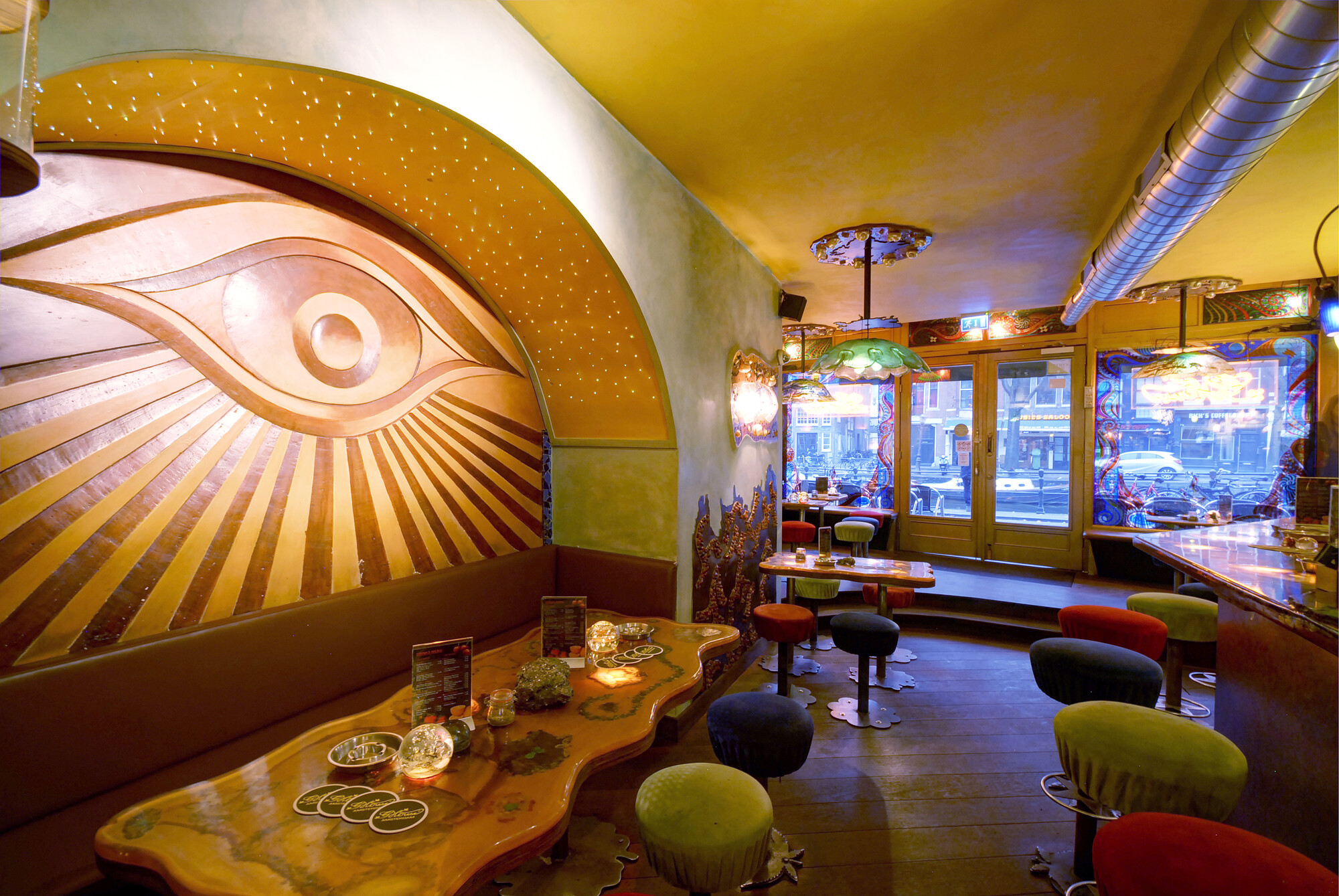
Coffeeshops: Dutch tolerance or ambivalence?
Cannabis has drifted through Amsterdam for centuries, carried by sailors returning from Morocco and the Mediterranean. In the 1920s, when jazz clubs around the Nieuwmarkt welcomed American greats like Duke Ellington, Louis Armstrong, and Cab Calloway, the smell of cannabis began to linger in the air. But the first flowering of Amsterdam’s cannabis culture was cut short. Driven by racism, police shut down the clubs, claiming white women were at risk of being seduced by Black musicians. Dutch tolerance, then as now, often revealed itself to be a thin layer of compromise and moral ambivalence.
That same ambivalence gave rise to the coffeeshop. In the 1970s, prosecutors quietly drafted guidelines that allowed the sale of small amounts of cannabis under strict conditions: up to 5 grams, no minors, no advertising, and no alcohol. Possession remained illegal on paper, but in practice it was tolerated — a system summed up in the Dutch word gedogen: something forbidden, but allowed.
The policy created one of the most famous paradoxes in the Netherlands. Coffeeshops became legal spaces for consumption, yet every gram sold still had to be grown illegally. Money flows from coffeeshops back through a black market of suppliers before being laundered into legitimate businesses — barbers, phone shops, travel agencies, and wedding dress boutiques in Amsterdam West. The “back door” problem has plagued Dutch cannabis policy for decades, but it also kept the system alive: everyone knows it’s happening, and as long as complaints are few, everyone looks the other way.
Coffeeshops went on to define Amsterdam’s global image. Tourists arrive in droves, seeing the city as synonymous with weed, a place of freedom and relaxation reinforced by film, music, and myth. Yet at home, cannabis remains a political headache. Municipalities wrestle with nuisance complaints, the government hesitates to fully legalize cultivation, and the plant itself remains stigmatized among many Dutch citizens. Smoking outside may be tolerated in some places, but you can still be fined if you ignore the no-smoking zones posted around the city.
So while Amsterdam’s coffeeshops are global icons, they remain built on contradiction: tolerated but not fully legal, famous abroad but contested at home. What the Dutch truly embrace is not cannabis itself, but the balancing act of compromise — gedogen — that keeps the system alive.
This story has an audio chapter in the app, and the map walks you to the spot.
Open this story on the map