Biking
Few things are as closely tied to Dutch life as the bicycle. Fietsen is not just a way to get around — it is the Netherlands’ main mode of transport and there are more bikes than people in the country. Amsterdam is no exception. For visitors, renting a bike is one of the easiest ways to feel like a local. For residents, it is simply how life is organized.
Amsterdam’s cycling culture did not happen by accident. In the 1970s, after decades of car-focused planning, citizens protested the danger posed to children by traffic. The movement known as Stop de Kindermoord — “Stop the Child Murder” — forced a shift in policy. From that point, urban planning began to prioritize safety and space for cyclists. Wide bike paths, traffic-calmed streets, and pink-painted lanes turned Amsterdam into a global model for sustainable mobility.
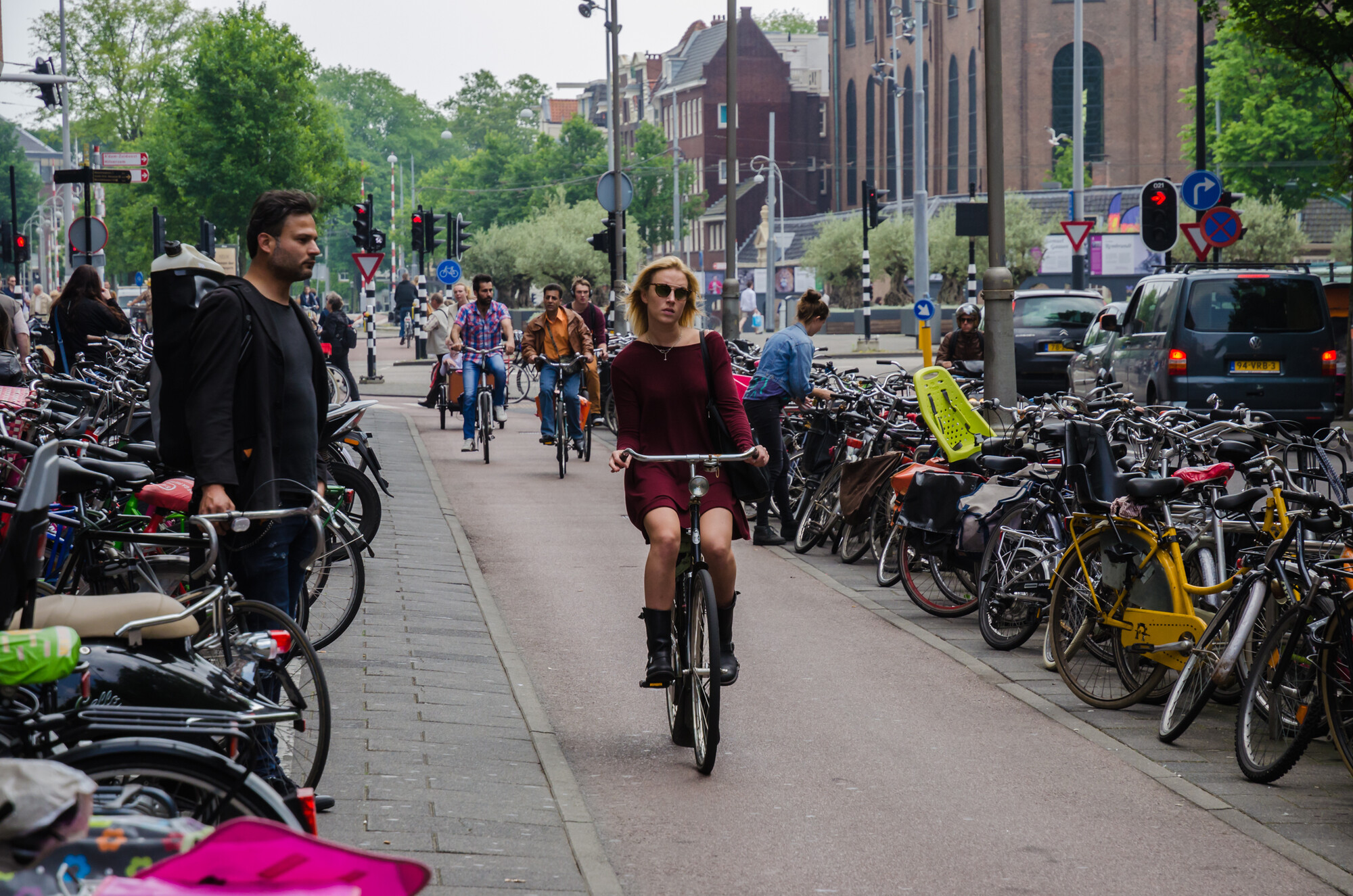
Today, the network is more advanced than ever. Bridges, tunnels, and parking garages are designed specifically for bikes. Commuters cross the city faster on two wheels than by car or tram. The fietspaden are so integral that they shape daily routines: parents drop their children at school in bakfietsen (cargo bikes), workers commute side by side, and even in the rain the cycling never stops.
But success brings new challenges. The rise of e-bikes, fat bikes, and scooters has increased speeds and tensions on the fietspaden. Congestion is no longer caused by cars, but by the sheer volume of cyclists. As Amsterdam approaches one million inhabitants, planners face the task of adapting an already world-class network to ever-growing demand.
Cycling in Amsterdam is both exhilarating and intimidating. For the uninitiated, the rush of bikes at crossings can feel chaotic and overwhelming. Yet for Amsterdammers, it is second nature — a system built on trust, rhythm, and shared rules that seem to be broken constantly. To get on a bike here is to step into the flow of the city itself, where freedom and order move forward together on two wheels.
This story sits on the map in the Free Amsterdam app, which walks you to the spot.
Open this story on the map